
Achilles tendon rupture: when ultrasound tells us everything
An Achilles tendon rupture causes sudden pain behind the ankle and difficulty walking. Why ultrasound is the key test, what it shows and how it is treated.
By Dr. Luigi ManziUpdated on
Have you ever heard a sharp crack during a tennis match? Or maybe while running to catch the bus?
Well, if you've ever felt a stabbing pain behind your ankle, followed by the inability to walk normally, you may have experienced what we orthopedists call an "Achilles tendon rupture." This is no small thing. It's an injury I see often in my office, especially among athletes or those over forty.
But the good news? Today we have incredibly precise diagnostic tools. Ultrasound, in particular, allows us to see exactly what's happening inside.
What is the Achilles tendon and why does it rupture?
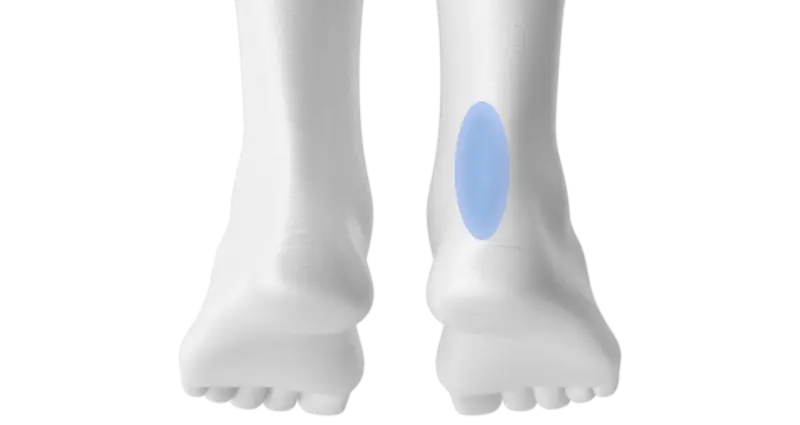
The Achilles tendon is that sturdy "rope" that connects your calf muscles to your heel. Think of it as your body's most important tow rope for walking, running, and jumping. Without it, you couldn't even stand on your toes.
It's the largest and strongest tendon we have, but paradoxically, it's also one of the most vulnerable. Why? Simple: it's subjected to enormous stress every day. When you walk normally, your Achilles tendon supports a load equal to 3-4 times your body weight. When you run? That's up to 6-8 times.
After all, nature designed it to be resistant, but not invincible. Rupture can occur for various reasons. Sometimes it's the result of sudden overload—like that lightning-fast tennis sprint I described earlier. Other times, it's the consequence of a degenerative process: the tendon weakens over time due to repeated minor trauma, age, or simply because we're no longer in our twenties.
I've seen many cases like this in my office. The other day, a 45-year-old architect came to me who had injured himself playing soccer with his colleagues. "Doctor, I heard a crack, and then I couldn't walk properly."
Symptoms You Can't Ignore
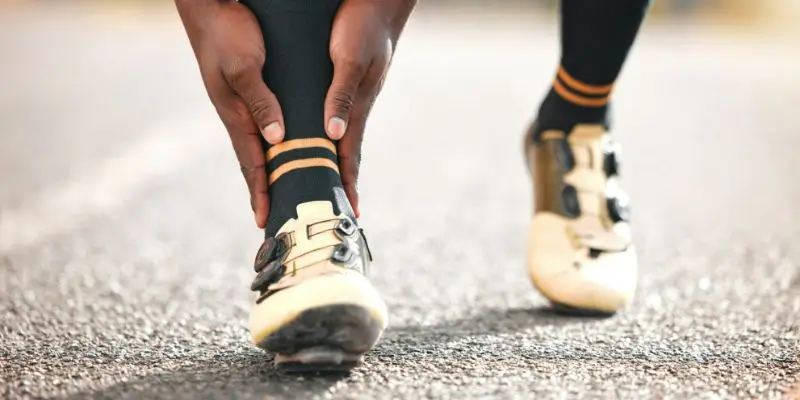
When your Achilles tendon ruptures, your body lets you know right away. The most characteristic symptom? That sudden, sharp pain that many patients describe as "a clubbing blow to the back of the ankle."
Often there's also this audible "pop"—a sharp snap you can clearly hear. It's not your imagination. It's the actual sound of fabric tearing.
Then comes the rest: swelling, bruising, and above all, the inability to stand on tiptoe on the affected foot. Many patients tell me they feel as if "the foot no longer responds to commands." That's a good description, actually.
The test I always do in the office? I have you lie on your stomach and compress your calf. If your foot doesn't move upward, the tendon is likely torn. It's the famous Thompson test, named after the surgeon who first described it.
Ultrasound: Our Invisible Detective
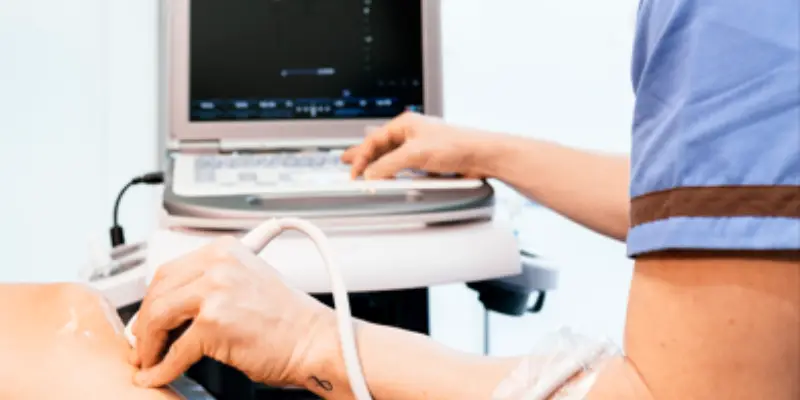
This is where ultrasound comes in. It's a fantastic tool for this type of diagnosis.
It works with ultrasound—high-frequency sound waves that bounce off the tissue and create a real-time image. It doesn't use radiation, it's painless, and it allows you to see exactly what's happening to the tendon while examining it.
Ultrasound for Achilles tendon rupture is particularly effective because the tendon is relatively superficial. There isn't much tissue obstructing the view, so I can very well assess both the integrity of the tendon and the extent of the damage.
During the examination—which lasts about 10-15 minutes—I can see if the tendon is completely torn or only partially torn. I can measure the distance between the stumps (if there is a complete tear) and assess whether other structures are involved.
It's amazing what you can see. A healthy tendon appears as a compact structure, with well-aligned fibers. When there's a rupture, however, you clearly see the discontinuity, often with fluid accumulation at the injured site.
Other tests we can do
Sometimes, however, ultrasound isn't enough. If I have doubts about the diagnosis or suspect associated injuries, I can request an MRI. MRI provides even more detailed information about the soft tissues and allows us to see if there are any problems with the surrounding muscles.
X-rays? Honestly, they're not very helpful for a ruptured Achilles tendon. X-rays only show the bones, not the tendons. I use them primarily to rule out associated fractures, but they're not our first-line test.
How to treat an Achilles tendon rupture
Treatment depends on many factors, including the patient's age, activity level, type of fracture, and how much time has passed since the injury.
For complete ruptures in young, active patients, I often opt for surgery. This allows for tendon reconstruction and, statistically, has a lower risk of re-rupture. I perform this procedure regularly here at SmartHallux, using minimally invasive techniques whenever possible.
For older or less active patients, conservative treatment can sometimes be a good option. This involves immobilization with a cast or brace for 6–8 weeks, followed by intensive physical therapy.
The choice is never simple. It depends on the patient, their expectations, and their lifestyle. It's a decision we always make together, after weighing all the pros and cons.
Recovery: Patience and Determination
Recovery from an Achilles tendon rupture takes time. There's no getting around this truth. I typically see patients return to normal walking after 3-4 months, while returning to sports takes at least 6 months, often longer.
Physiotherapy is essential. It's not just a matter of strengthening the repaired tendon, but of re-educating the entire movement pattern. The body has become accustomed to compensating during the period of immobilization, and it must be re-taught to function properly.
Complications? They can occur, but they're rare if everything is done properly. The most feared risk is rerupture, which occurs in about 2-5% of cases after surgery, slightly more with conservative treatment.
How to prevent Achilles tendon rupture

Prevention, as always, is worth more than a thousand cures. Warming up before physical activity is essential—you can't expect a tendon to go from zero to one hundred without preparation.
Calf stretching should be part of your daily routine, especially if you play sports. Footwear also plays a role: shoes that are too flat or too stiff can increase stress on the tendon.
And then there's common sense. If you're forty and haven't played soccer in twenty years, maybe it's not the right time to dive headfirst into the most important match of the company season.
SmartHallux: Where we can help you

Here at SmartHallux, we specialize in foot and ankle surgery. Dr. Luigi Manzi, who has extensive experience in this field, follows each patient with a personalized treatment plan using the most modern techniques, including high-precision ultrasound for the diagnosis of tendon injuries.
The SmartHallux team treats conditions such as hallux valgus , Morton's neuroma , and other deformities that cause foot pain. Providing comprehensive support throughout the treatment process, SmartHallux can be a winning choice for effective treatment tailored to your needs. Book your specialist consultation with the SmartHallux team now (opens in a new tab).
Questions you often ask me
Doctor, how much does an Achilles tendon rupture hurt?
Let's just say it's not a walk in the park. The initial pain is intense, but it often subsides fairly quickly. What remains is mostly a feeling of instability and the inability to walk normally. The main problem isn't the pain, it's the loss of function.
Is ultrasound always sufficient for diagnosis?
In the vast majority of cases, yes. Ultrasound has a 95% accuracy rate in diagnosing a complete Achilles tendon rupture. Very rarely do I need an MRI to get a clearer picture.
If I don't have surgery, what happens?
It depends. Partial tears often heal well even without surgery. For complete tears, conservative treatment can work, but statistically there's a higher risk of re-tearing and some residual weakness may remain. Each case is different, however.