
Achilles Tendon Scarification: When Minimally Invasive Technique Makes a Difference
Achilles tendon scarification is a minimally invasive procedure that stimulates healing in tendinopathy that fails to improve. How it works and recovery.
By Dr. Luigi ManziUpdated on
Your Achilles tendon hurts. Really bad. And when the pain becomes chronic, when putting your foot down every morning is a pain, then you start to think that maybe it's time to do something more than the usual ice and rest.
You may have heard of Achilles tendon scarification. It's a scary name, I admit. But it's actually a minimally invasive surgical technique that can truly transform the quality of life when tendinopathy refuses to heal with conservative treatments. I've seen many patients run again, walk without pain, and resume their normal activities after this procedure.
Let's take a look at what it's really all about, because sometimes the information out there is confusing or incomplete. After all, when it comes to surgery, it's normal to have doubts and fears.
When the Achilles tendon “rebels”
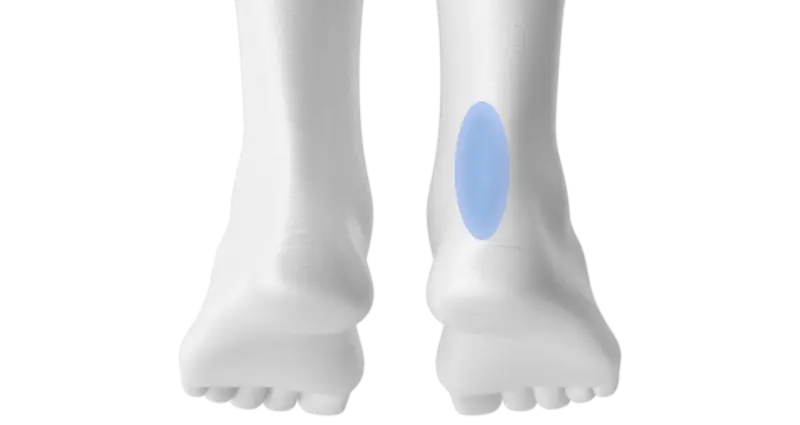
Think of the Achilles tendon as the most important cable in your body. It connects your calf muscle to your heel and is what allows you to push off when you walk, run, or jump. It's a very powerful tendon, but precisely because of this, it can suffer.
Achilles tendinopathy—as we doctors call it—is essentially a chronic inflammation of the tendon. The tissue becomes thickened, painful, and stiff. The other day, a patient came to me and said, "Doctor, it's like I have a rock stuck in my heel." Now, that's a perfect description of what it feels like.
The problem is that when tendinopathy becomes chronic, the tendon loses its normal structure. Areas of degenerated tissue and small calcifications form, and the pain becomes persistent. At this point, conservative therapy is often no longer sufficient.
Why is this disaster happening?

There are several reasons why the Achilles tendon can become so damaged. Overuse is certainly the most common cause—too much physical activity, perhaps after a period of inactivity. "I started running again after the summer, and now I can't walk anymore," I'm often told.
But it's not just a matter of exercise. Age plays a role, as tendons become less elastic as we age. Excess weight can also contribute, as can certain metabolic diseases or the prolonged use of certain medications, such as antibiotics from the fluoroquinolone family.
An interesting thing I've noticed in my experience is that Achilles tendinopathy often affects people who have suddenly changed their habits. The weekend warrior who decides to run a marathon. Or the person who changes their running shoes without a gradual adaptation period.
How the problem manifests itself
Pain is the main symptom, but it's not always the same. Some patients tell me of a dull, constant ache, others of a sharp pain that only occurs with certain movements. It's often worse in the morning—those first steps out of bed are a nightmare.
Stiffness is another important sign. The tendon feels "locked," especially after periods of rest. Then there's swelling, a thickening of the tendon that can be seen and felt. Sometimes a painful nodule also forms.
Scarification: What it really is
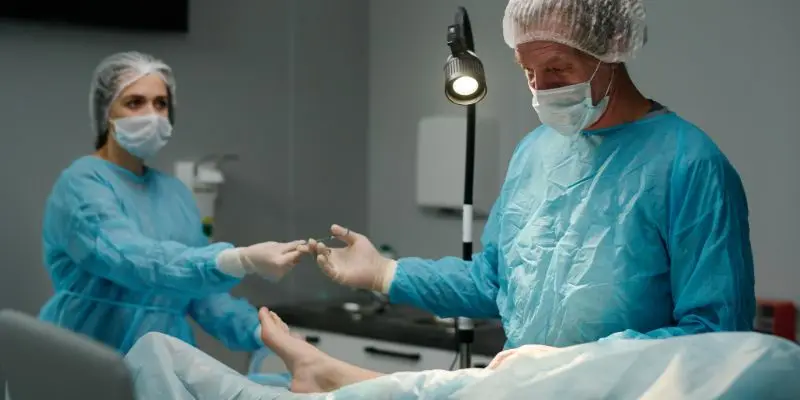
Now we come to the crux of the matter. Achilles tendon scarification is a minimally invasive surgical procedure used specifically to treat these chronic tendinopathies that don't heal with conservative therapies.
During the operation, we use a small instrument called a tenotome to make tiny incisions in the diseased tendon. These microincisions have two key effects: they break down the degenerated scar tissue and stimulate a new healing response in the tendon.
It's a bit like "restarting" the tendon's healing process. The small wounds we create in a controlled manner prompt the body to produce new, healthier tendon tissue that's more elastic and functional.
The procedure takes about 30-40 minutes and is performed as an outpatient procedure. Hospitalization is not required. I use local anesthesia or, in some cases, light sedation to make everything more comfortable.
The advantages that make the difference
Why choose scarification instead of traditional open surgery? There are several important reasons.
First of all, it's truly minimally invasive. We make only small incisions of a few millimeters, so the surrounding tissue remains virtually intact. This means less surgical trauma, less post-operative pain, and, crucially, faster recovery times.
My patients usually return to normal walking within a few weeks, whereas with traditional surgery it takes months. The risk of infection is very low, as is that of other complications. And what about post-operative pain? It's much more manageable than with traditional procedures.
Who can benefit from it
Not all patients with Achilles tendinopathy are candidates for scarification. I usually recommend it when:
– Tendinopathy has been present for at least 6 months
– Conservative treatments (physiotherapy, drugs, shock waves) have not given results
– Pain significantly interferes with daily activities
– General health conditions allow for minor surgery
Age isn't an absolute limit. I've operated on 70-year-old patients who wanted to get back to their morning walks, as well as athletes in their twenties who were no longer able to train.
Recovery: What to Expect

After surgery, the tendon needs time to "reorganize." For the first 2-3 weeks, a protective brace is worn to limit the most stressful movements. It's not a cast, but more like an orthopedic shoe that still allows you to walk.
Then the rehabilitation phase begins. It's crucial to follow the physiotherapist's instructions. The rehabilitation begins with gentle mobilization exercises, then gradually increases the load. Most patients return to normal activities within 3-4 months, although serious athletes may need a few more weeks to fully return to competitive activity.
One thing I always tell my patients: patience is key. The tendon doesn't repair itself overnight, but when it does, the results are usually very satisfying.
SmartHallux: Where we can help you

Here at SmartHallux, we specialize in foot and ankle surgery. Dr. Luigi Manzi, who has extensive experience in this field, follows each patient with a personalized treatment plan using the most modern techniques, including Achilles tendon scarification for optimal recovery.
Our approach is always personalized because every case is different. Before proposing any procedure, we always carefully evaluate whether there are any conservative alternatives that remain untried.
The SmartHallux team treats conditions such as hallux valgus , Morton's neuroma , and other deformities that cause foot pain. Providing comprehensive support throughout the treatment process, SmartHallux can be a winning choice for effective treatment tailored to your needs. Book your specialist consultation with the SmartHallux team now (opens in a new tab).
Questions you often ask me
Does scarification hurt a lot?
Postoperative pain is generally well tolerated. We use effective painkillers, and most patients tell me they feel better than expected. It's nothing like the pain they experienced before surgery.
How long do I have to take off work?
It depends on the type of work. If you have a sedentary job, you can return after a few days. If your job requires a lot of standing or exertion, it may take 2-3 weeks.
Can I have a relapse?
It's possible, but not common. Scarification has a very high success rate, exceeding 80%. When the rehabilitation protocol is followed correctly, the results are usually long-lasting.
Will the tendon remain weaker?
On the contrary. The goal is precisely to achieve a healthier and more functional tendon than before. Obviously, caution is required in the first few months, but once healing is complete, there are no particular limitations.