
Achilles Tendonitis: When Your Heel Cries Out for Help
Achilles tendonitis causes pain and stiffness at the back of the heel, often worst in the morning. The causes, how to treat it and when to see a specialist.
By Dr. Luigi ManziUpdated on
Have you ever woken up in the morning and felt that sharp pain in your heel? Like someone stuck a nail right there? Well, you've probably been exposed to Achilles tendonitis.
I see this condition practically every week in my office. It's one of those things that, once it appears, you just can't ignore. The Achilles tendon—the one that connects the calf muscles to the heel—suddenly decides to act up, and believe me, when it does, the whole foot feels it.
The interesting thing is that patients often come to me convinced they have plantar fasciitis. "Doctor, I have this pain under my foot..." But no, the problem is right there, in that cord that feels like a guitar string that's been pulled too tight.
What is this tendonitis really?

Think of the Achilles tendon as the most important tendon in your foot. It's large and strong, but even it has its limits. When we put too much stress on it—perhaps because we've started running again after months of couch potato use, or because we've suddenly changed shoes—this tendon becomes inflamed.
Inflammation means pain. It means that every step becomes a little torture, especially in the morning when the tendon is still "cold" from the night. I have patients who tell me: "Doctor, the first steps are terrible, then little by little it gets a little better." Exactly, that's exactly how it works.
Sometimes the tendon not only becomes inflamed, but also thickens. It becomes like a knotted ball instead of a smooth rope. And when you touch that area... ouch. The sensitivity is sky-high.
Why does it happen? The causes I see most often

Over the years, I've noticed some recurring patterns. There's the runner who overdid the mileage. The woman who took up tennis again after years. The man who decided to run up the stairs to get back in shape.
It's often a matter of "too much too soon." Our bodies adapt, but it needs time. If you go from zero to one hundred in a short time, something will protest sooner or later. And it's usually the Achilles tendon that does so first.
The wrong shoes are another classic. Shoes that are too flat, too stiff, or worse, old shoes that no longer provide any cushioning. The poor tendon finds itself doing a job it's not equipped for.
Age also plays a part. It's not that you automatically become fragile at forty, but let's just say that the tendon loses some of its youthful elasticity. It's normal, it's part of the game.
The symptoms that never lie

"Doctor, it hurts especially in the morning." This is the phrase I hear most often. The classic pain of Achilles tendinitis is exactly that: intense when you get out of bed, then improves a little throughout the day, but returns after you've been sitting for a long time.
Some patients describe a feeling of stiffness, as if their heel were "stuck." Others report pain radiating down the entire calf. And then there are those who actually feel the tendon swollen and warm to the touch.
One important thing: if you press on the back of your heel and it hurts, you're probably dealing with it. If the pain is more on the ball of your foot, it could be plantar fasciitis, which is a whole different story.
How I get to the diagnosis

When a patient comes into my office with these symptoms, the first thing I do is listen. I always say that 80% of the diagnosis comes from the patient's story.
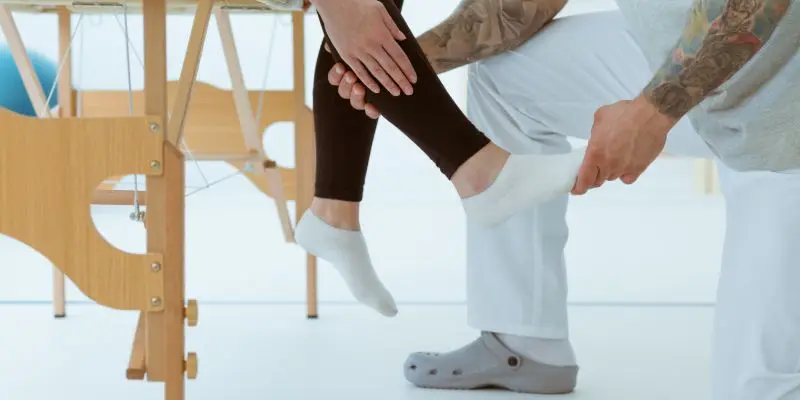
Then, of course, I look at the foot. I check the tendon, see if it's swollen, if it hurts when I touch it. I have them do some simple movements: "Try pointing your foot up... and now down." If they grimace when they point up, we're usually good.
Sometimes an ultrasound is needed to better understand the situation. Ultrasound is fantastic for these cases because it allows us to see inflammation, any thickening, and small lesions that can't be seen from the outside.
In special cases, I also request an MRI, but honestly, in most cases, it's not necessary. The ultrasound already tells us everything we need to know.
Treatments that really work

The first thing I always tell my patients is, "We need to rest the tendon." I know, it seems obvious, but people often think they can just carry on as before. It doesn't work that way.
Rest doesn't mean staying in bed for weeks, it means avoiding activities that trigger the pain. If running hurts, don't run for a while. Period. Ice helps in the first few days, especially if there's obvious swelling.
Anti-inflammatories can provide relief, but they're a temporary solution. The real work comes from stretching and strengthening exercises. I always teach my patients specific exercises: calf stretches, eccentric tendon strengthening.
We sometimes use shockwave therapy, which stimulates tendon healing. It works well, although you need to be patient because the results aren't immediate.
Injections? I rarely use them for the Achilles tendon. They may provide temporary relief, but they risk further weakening the tendon.
How long does it take to heal?
This is the question everyone always asks me. "Doctor, how long will it be before I can run again?" The honest answer is: it depends. It depends on how severe the inflammation is, how long the problem has been present, and how cooperative the patient is with the exercises.
On average, with proper treatment, you start to feel better in 2-3 weeks. Complete recovery can take up to 2-3 months. I know, it seems like a long time, but the Achilles tendon is a slow-healing tissue.
The key is to take your time. I've seen too many relapses in patients who returned to intense activity too quickly.
How to prevent the problem
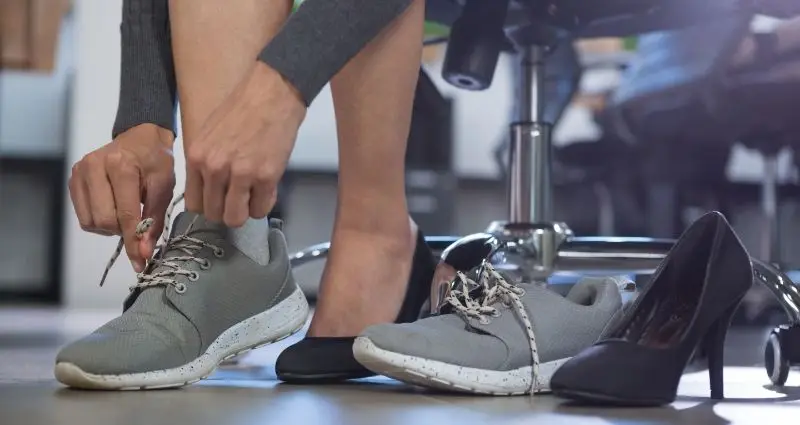
Prevention starts with shoes. Shoes that are appropriate for your activity, replaced when worn, and with good arch support.
Then comes the warm-up. Always. Before any physical activity, even a simple brisk walk. The Achilles tendon needs to warm up to function properly.
Calf stretching exercises should be done regularly, not just when it hurts. Five minutes a day can prevent weeks of pain.
And if you resume an activity after a period of inactivity, do so gradually. Your body has a memory, but it needs time to readjust.
SmartHallux: Where we can help you

Dr. Luigi Manzi, who has gained specific experience in this field, follows each patient with a personalized treatment plan using the most modern techniques, from shock waves to targeted physiotherapy and, when necessary, minimally invasive surgery.
The SmartHallux team treats conditions such as hallux valgus , Morton's neuroma , and other deformities that cause foot pain. Providing comprehensive support throughout the treatment process, SmartHallux can be a winning choice for effective treatment tailored to your needs. Book your specialist consultation with the SmartHallux team now (opens in a new tab).
FAQ
But is it true that it can also happen to those who don't play sports?
Absolutely. I've seen it in people who work on their feet all day, in those who suddenly changed their footwear, even in those who simply walked a lot more than usual during the holidays.
If the pain goes away on its own, can I consider myself cured?
Not really. Pain that temporarily subsides often returns because the underlying problem hasn't been resolved. It's best to get an evaluation even when the pain improves.
Do I have to do the exercises forever?
Maintenance exercises, yes, should become part of your routine. Like brushing your teeth. A few minutes a day to avoid relapses.