
Ankle Osteoarthritis After a Fracture: What You Need to Know
Ankle osteoarthritis after a fracture develops when the joint surface heals unevenly and the cartilage wears. Who is at risk, the symptoms and the treatments.
By Dr. Luigi ManziUpdated on
Have you ever fractured your ankle years ago and now feel like something's wrong? Pain that wasn't there before, morning stiffness, difficulty walking like you used to?
Unfortunately, this is a situation I see often in my office. Ankle osteoarthritis after a fracture is more common than you might think, and today I want to explain why it happens and what we can do together.
The ankle is a complex and delicate joint. When it fractures, even with the best possible care, changes can occur that over time lead to cartilage wear, and post-fracture ankle arthritis becomes inevitable.
What exactly is post-traumatic ankle osteoarthritis?

So, let's clarify a bit. Osteoarthritis is essentially the wear and tear of the cartilage that covers the bones in the joint. Think of cartilage as the "cushion" that allows the bones to slide over each other without friction.
When this cushion wears out, problems begin. In the specific case of ankle osteoarthritis after a fracture, we're talking about what we call "post-traumatic" osteoarthritis—that is, caused by a previous trauma.
Unlike "normal" arthritis that comes with age, this can also affect young people. I've seen patients aged 35-40 with severe arthritis after fractures that occurred perhaps in their 20s while playing sports.
Why it happens after a fracture
Here's the question everyone asks me: "Doctor, I did everything right after the fracture, why do I have arthritis now?"
The reality is that during a fracture, several things can happen that predispose to osteoarthritis. The cartilage can be damaged directly at the time of the injury—although we don't always see this immediately on x-rays.
Then there's the issue of alignment. When bones fracture and heal, they don't always return to their exact original position. Even small changes in alignment can alter how weight is distributed across the joint.
And let's not forget prolonged immobilization. When you keep a joint inactive for weeks in a cast, the cartilage suffers. It needs movement to stay nourished by the synovial fluid.
Instability is another important factor. If the fracture involves the ligaments or if they haven't healed properly, the joint can become "wobbly," and this abnormal movement accelerates wear.
Signs that something is wrong

The symptoms of ankle osteoarthritis are quite characteristic, although they may be subtle at first.
Pain is the first warning sign. It's not sharp like a fracture, but rather a dull, deep pain. Many patients tell me, "It's like I can hear my bones grinding." It's often worse in the morning when you get out of bed—the first steps are the hardest.
Stiffness is another typical symptom. You'll notice that your ankle doesn't move as well as your other ankle, especially when you try to bend your foot up or down. Some patients tell me they have difficulty driving or climbing stairs.
Swelling may be present, but it's not always obvious. Sometimes it's more of a feeling of "tightness" in the area. And then there's that annoying creaking sound—what we call crepitus—when you move the joint.
How do I diagnose?

When you come to my office with these symptoms, the first thing I do is listen. Your history is crucial: when the fracture occurred, how it was treated, when the current problems began.
Then comes the physical exam. I watch how you walk, check your ankle movements, and palpate to feel where it hurts the most. Sometimes, even within these first few minutes, I have a pretty good idea of what we're dealing with.
X-rays are essential to confirm the diagnosis. They clearly show the narrowing of the joint space, the formation of osteophytes (those bony "spines" that form at the edges of the joint), and any deformities.
In some cases, a CT scan or MRI may be necessary to obtain a more detailed picture, especially if we are considering surgery.
What we can do: Treatment options
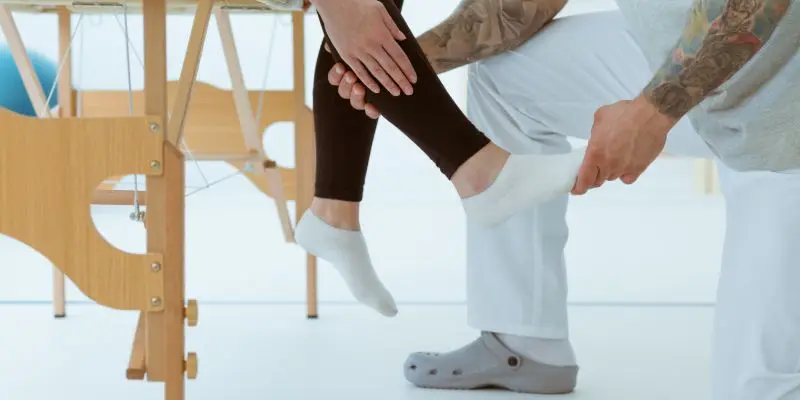
Now let's get to the point: what do we do with this arthritis?
The good news is that we have several options. Surgery isn't always necessary; on the contrary, we always start with what we call conservative treatment.
Anti-inflammatory medications can provide relief, but be careful not to overuse them. I also frequently use hyaluronic acid injections—a substance that helps "lubricate" the joint. It's not a permanent cure, but it often provides relief for months.
Physical therapy is essential. A good physical therapist can teach you specific exercises to maintain mobility and strengthen the muscles supporting the ankle. I've seen patients improve significantly with just a well-designed physical therapy program.
Customized foot orthotics can make a difference. By correcting the foot's position, the load on the arthritic joint can be reduced.
When conservative treatment is no longer sufficient, we must consider surgery. There are various options: from arthroscopy (to "clean" the joint) to ankle replacement, to arthrodesis (which blocks the joint but eliminates pain).
The recovery journey

A question you always ask me: “How long does it take to get better?”
It depends a lot on the type of treatment we perform. With conservative treatment, we often see improvements within a few weeks or months. Don't expect miracles overnight, but with patience, good results can be achieved.
If we undergo surgery, however, the recovery time is longer. After an arthrodesis, for example, it takes at least 3-4 months before you can walk normally, and up to a year for full recovery.
How to prevent osteoarthritis after a fracture

This is a smart question that unfortunately few people ask me. Prevention begins immediately after the fracture.
It's crucial to strictly follow the instructions of your orthopedic surgeon. Respect the immobilization and rehabilitation periods. I often see patients who are in a hurry to return to normal activities and skip physical therapy.
Maintain a healthy body weight—every extra pound puts additional strain on your joints. And try to engage in regular physical activity, but choose sports that don't put too much stress on your ankles.
SmartHallux: Where we can help you

Here at SmartHallux, we specialize in foot and ankle surgery. Dr. Luigi Manzi, who has extensive experience in this field, provides each patient with a personalized treatment plan using the most modern techniques.
Our approach is always multidisciplinary: we work together with specialized physiotherapists, orthopedic insole technicians, and other specialists when necessary.
The SmartHallux team treats conditions such as hallux valgus , Morton's neuroma , and other deformities that cause foot pain. Providing comprehensive support throughout the treatment process, SmartHallux can be a winning choice for effective treatment tailored to your needs. Book your specialist consultation with the SmartHallux team now (opens in a new tab).
The questions you ask me most often
Doctor, is it normal to feel pain even years after the fracture?
Absolutely, unfortunately. Post-traumatic osteoarthritis can appear many years after the initial fracture. It's not your fault if you didn't do anything wrong during the healing process.
Will I have to have surgery?
Not necessarily. Many patients manage well with ankle osteoarthritis thanks to conservative treatment. Surgery is considered when the pain becomes unbearable and significantly limits quality of life.
If I have surgery, will I be able to go back to sports?
It depends on the type of surgery and your previous activity level. With an ankle replacement, many patients return to low-impact sports. With an arthrodesis, the limitations are greater, but the pain relief is often worth the trade-off.
Can osteoarthritis get worse over time?
Unfortunately, osteoarthritis tends to be progressive. This is why it's important to intervene early with conservative treatment to slow the degenerative process.