
Achilles tendonitis surgery: when it is needed and how it works
Surgery for Achilles tendonitis is considered only when conservative treatment fails. The techniques, open and minimally invasive, and the recovery times.
By Dr. Luigi ManziUpdated on
Painful and severely debilitating, Achilles tendinitis is a condition that must be overcome to live a fulfilling life. In this article, "Achilles Tendinitis Surgery," we'll explain how.
Conservative treatments are often recommended, but when these don't work, what should you do?
Surgery can be a successful and definitive solution.
Let's find out together what types of surgery there are for Achilles tendonitis , what to expect from post-operative recovery and which specialists to turn to.
When to consider surgery?

As mentioned above, when conservative treatments do not resolve Achilles tendonitis, doctors recommend surgery.
If after many months of physiotherapy and medication , you continue to experience pain and your leg mobility is still poor, there will be no other solution than to undergo surgery.
If conservative treatments are not sufficient, this may depend both on the degree of tendon involvement and also on the patient's healing expectations.
In fact, very often, it is the patient himself who expects improvements that, unfortunately, he is unable to achieve with conservative treatments.
When deciding to undergo surgery, the patient is often determined not only by the severity of the condition but also by the goals set by the surgery itself.
The Goals of Achilles Tendinitis Surgery

The goals of surgery for Achilles tendonitis are essentially aimed at restoring full functionality of the tendon , eliminating pain and preventing other complications and pathologies.
Going into a little more detail, the objectives of surgery for Achilles tendonitis can be listed as:
- Removal of all damaged tissue: which reduces pain and inflammation;
- Tendon repair: to strengthen the tendon in general and restore mobility to the leg;
- Reduction of tension on the tendon: above all to achieve complete recovery and prevent future injuries.
Types of Intervention
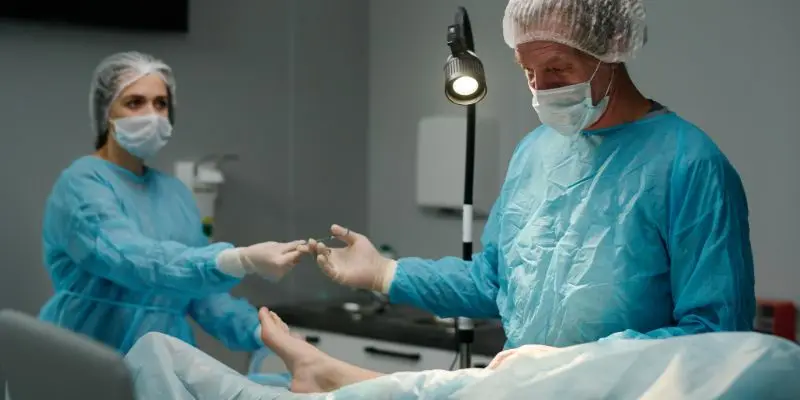
Depending on the severity of the condition and the patient's desired goals, they can choose between different types of intervention for Achilles tendinitis.
Among the most recommended and common interventions are: open surgery , minimally invasive surgery and regenerative therapies associated with surgery.
Open Surgery
The most traditional of the operations mentioned.
It involves making a fairly large incision in the affected area . This incision will provide direct access to the tendon so that the injured area can be treated.
In fact, tendinitis can compromise the tissues to the point of requiring their removal.
The large incision , therefore, serves to safely remove the tissues that are now too compromised and to ensure complete tissue regeneration.
This procedure was once considered the safest and most effective method for addressing the most complex and extensive problems. However, what can be frightening for patients is the recovery time , which, given the large scar and the invasive nature of the procedure, can be quite lengthy.
Minimally Invasive Surgery
As can be understood from the name itself, this surgery is considered the least invasive.
Unlike traditional surgery, minimally invasive surgery involves small incisions made with innovative and technologically advanced surgical instruments.
All this is aimed at intervening on the tendon tissues with the least possible surgical trauma, and not only that.
In fact, with a less invasive approach there will also be a shorter recovery period , less visible scars and less post-operative pain.
This surgical technique is preferred by those patients who want a quick recovery time, so as not to disrupt their daily routine too much.
Regenerative therapies associated with minimally invasive surgery
A popular innovation in recent years is the integration of regenerative therapies and minimally invasive surgical techniques.
But what is the purpose of this integration of different techniques?
For example, the administration of PRP (platelet-rich plasma) , combined with a minimally invasive procedure, aims to heal the body naturally , thanks to the regeneration of tendon tissue; this also speeds up post-operative recovery.
PRP, above all, is preferred to aid rapid healing and prevent future complications.
This integration of approaches is considered a fundamental advancement in the treatment of foot and ankle pathologies, ensuring not only the success of the approach but also ensuring reduced recovery times.
Post-Operative Recovery

After Achilles tendon surgery, post-operative recovery is an essential and fundamental process for complete healing of tendinitis.
After a mandatory period of rest , the doctor prescribes physical therapy to follow.
Physiotherapy and personalized , targeted exercises will help restore flexibility and strength to the tendon. Physical therapy should be combined with the use of comfortable , physiotherapy-appropriate shoes.
As with any surgery, however, post-operative recovery times vary depending on the severity of the condition, the chosen procedure, and, ultimately, the patient's age and health.
In fact, the estimated recovery times are between 2 and 6 months , although longer (even 8 months) or significantly shorter (3 weeks – 1 month) recovery times are not excluded.
SmartHallux's innovative techniques: The right choice for you

If you're looking for specialists who can perform various types of Achilles tendonitis surgery and support you throughout the post-operative phase, the SmartHallux team is ready to answer your call.
SmartHallux is directed by Dr. Luigi Manzi , an internationally renowned surgeon, famous for having experimented with new minimally invasive and functional surgical techniques that radically reduce post-operative recovery time.
Before deciding whether or not to undergo surgery, however, it is essential to diagnose tendinitis and evaluate the alternatives and expectations placed on the procedure.
SmartHallux offers a variety of consultation options to meet the needs of all patients. From in-office visits to telemedicine consultations, SmartHallux also offers home visits.
Book an appointment with SmartHallux

Booking an appointment with SmartHallux is simple and immediate.
Click here and fill out the small booking form.
If you'd like to visit the practice, you'll have the option to choose the city in which to do so.
Trust SmartHallux! Not only will you be sure you've chosen the best in the industry , but you'll return to your daily life healthier than ever.