
What is Achilles tendonitis and how is it treated?
Achilles tendonitis is inflammation of the tendon that joins the calf muscles to the heel bone. The causes, the symptoms and treatments, from rest to surgery.
By Dr. Luigi ManziUpdated on
When you think about the weak point par excellence of the human body, you cannot help but mention the Achilles heel.
Everyone knows the legend that the indomitable Achilles was knocked out by a blow to the heel. Hence the name "Achilles' heel."
Less known, however, are the pathologies that affect the heel and the Achilles tendon.
In this article we will delve into what Achilles tendonitis is and how it is treated.
The Anatomy of the Achilles Tendon

At the back of the leg, between the heel and the calf , is the Achilles tendon.
This tendon, which we can imagine as a sturdy connective tissue structure, connects the calf muscles to the heel. It goes without saying that the Achilles tendon is essential for stability , as well as for mobility of the foot and the entire body.
In fact, it is thanks to the Achilles tendon that humans are able to perform all essential daily activities, such as walking , running , and jumping . Therefore, being a fundamental and essential part of human mobility, it is constantly under stress.
Achilles tendonitis

When the Achilles tendon is under excessive stress, it can become inflamed . This condition is called Achilles tendinitis.
But how is the Achilles tendon stressed?
There are several causes why the tendon can become inflamed and, very often, they are due to lifestyle and personal habits.
This condition is more common among athletes and sportspeople , who, for various reasons, severely test the resistance and health of the Achilles tendon. However, this condition can affect anyone.
Achilles tendinitis, in fact, also affects those people who wear uncomfortable and unsuitable shoes or who, having previous posture problems , particularly stress their tendons and joints.
How to Recognize Achilles Tendinitis: Symptoms

But how can you recognize Achilles tendinitis?
There are symptoms that are not only annoying but also useful for understanding and recognizing this pathology.
The main symptoms are:
- Sharp pain or dull ache above the heel (which may worsen during physical activity);
- Morning stiffness;
- Swelling and sensitivity to touch;
- Poor mobility such as the inability to bend the foot downwards and walk on tiptoe.
These symptoms contribute to a lowering of the patient's quality of life , but they are also signs of the presence of a problem, making the patient aware of the need to contact a doctor for a diagnosis.
Diagnosing Achilles Tendinitis
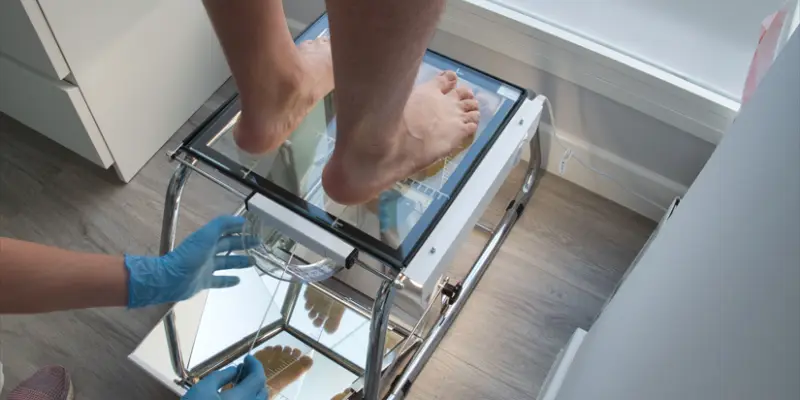
An early diagnosis is essential to address the disease as soon as possible and regain control of one's life.
The diagnostic procedure begins with a thorough physical examination . The doctor will examine the patient, focusing on foot mobility and other aspects. He will try to assess the severity of the pain , always in consultation with the patient, and will also try to identify any possible nodules on the tendon.
To confirm the doctor's suspicions, an ultrasound scan will be performed . This allows the inflammation and any structural changes in the tendon to be seen. For further confirmation, in more complex cases, an MRI scan may also be necessary , which provides more precise, high-resolution images.
All this helps us to intervene promptly and decide on an action plan as soon as possible.
Non-Surgical Treatments for Achilles Tendinitis

After a diagnosis of Achilles tendonitis, the first recommended approach is usually non-surgical treatments, called conservative treatments.
What do these treatments consist of?
Doctors typically recommend rest , along with the application of ice to the affected area. Reducing physical activity and exertion helps prevent the condition from worsening, while applying ice reduces swelling and numbs the affected area, thus reducing pain.
Taking anti-inflammatory and painkilling drugs is also recommended , which help combat the pain.
These therapies also include physiotherapy and the use of customized orthotics . Physiotherapy aims to improve mobility and flexibility in the affected area, while the orthotics relieve general pressure on the tendon.
Conservative treatments can usually last several weeks and, depending on the severity of the pathology, even months.
Patients are usually able to combat Achilles tendinitis with these treatments. Unfortunately, however, these treatments do not always permanently resolve the problem, and surgery may be necessary.
Surgery for Achilles Tendinitis
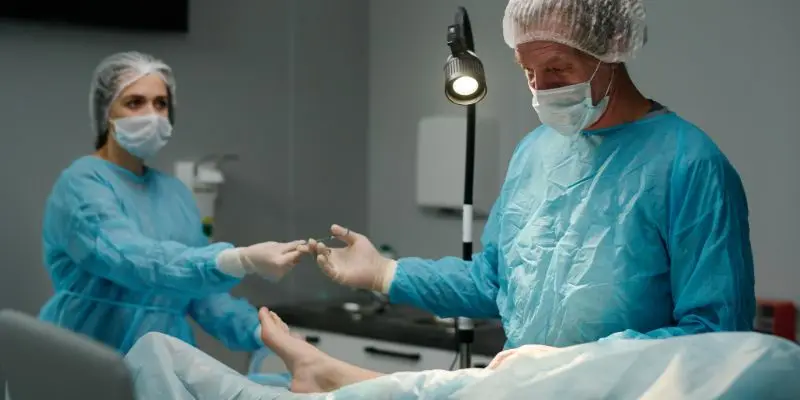
Doctors recommend surgery when conservative treatments do not meet the patient's expectations.
Surgery for Achilles tendonitis varies depending on the severity of the condition and also depends on the patient's general health .
So, what are the various types of surgery for Achilles tendonitis?
When tendinitis is debilitating, but not yet at the most serious stage, it is not uncommon to opt for tenotomy and tenodesis.
Tenotomy involves removing the damaged tissue of the tendon and possibly lengthening it. Tenodesis , on the other hand, involves repositioning the same tendon or another tendon to support the Achilles tendon.
When the condition of the tendon is more serious, however, the option is to reconstruct the tendon itself, which is replaced with a graft or regenerated with the help of stem cells.
As a minimally invasive procedure, arthroscopy is worth mentioning . This innovative technique uses an arthroscope, equipped with a small camera that is inserted into the affected area through small incisions in the skin.
SmartHallux Emergency Service for Achilles Tendinitis

If your Achilles tendonitis has become unbearable and you don't know who to turn to, you should know that SmartHallux also offers an emergency service that represents a true innovation in the field of orthopedic care.
The assistance provided by SmartHallux specialists guarantees not only timely action but also the certainty of taking advantage of advanced therapies such as those based on stem cells.
SmartHallux's innovative techniques not only reduce the need for more invasive interventions, but also reduce post-operative recovery times.
Not only these advantages, but SmartHallux also ensures low costs , making its services accessible to everyone.
Simply put, SmartHallux offers a combination of efficiency, speed, and convenience that few can match.
Contact SmartHallux for a free consultation

To defeat Achilles tendonitis with the help of industry experts, contact SmartHallux for a free consultation.
SmartHallux offers several telemedicine services that allow you to receive advice and consultations directly from home. In-office and home visits are also available. Simply book an appointment on the SmartHallux website or call the dedicated number to begin your healing journey.