
Heel surgery stop: when your heel won't stop hurting
Heel surgery is considered when plantar fasciitis no longer responds to conservative treatment. When it is indicated, what it involves and the recovery.
By Dr. Luigi ManziUpdated on
Have you ever felt that stabbing pain in your heel? The one that makes you jump when you take a step in the morning?
If the answer is yes, you probably already know how frustrating it can be to live with this problem. Plantar fasciitis is one of the most common causes of heel pain, and when all conservative treatments fail, heel surgery comes in.
But let's take a step back. This procedure isn't the first option I recommend to my patients—in fact, it's more of a last resort when we truly can't solve the problem any other way. After all, we orthopedists always prefer to try the least invasive treatments first.
When the heel becomes an enemy

Plantar fasciitis is an inflammation of the band of fibrous tissue that runs under the sole of the foot, from the base of the heel to the toes. Imagine a stretched rubber band that suddenly begins to tear at the attachment point.
The typical pain? A twinge that takes you by surprise, especially in the morning. My patients often tell me, "Doctor, it feels like someone hammered a nail into my heel." After a few steps, the situation improves slightly, but the discomfort remains. And when it becomes chronic, it becomes truly difficult to bear.
Truth be told, it's not always just the plantar fascia that's to blame. Often, a heel spur—that small bony growth that forms on the heel and contributes to the pain—also complicates matters.
Why is all this happening?
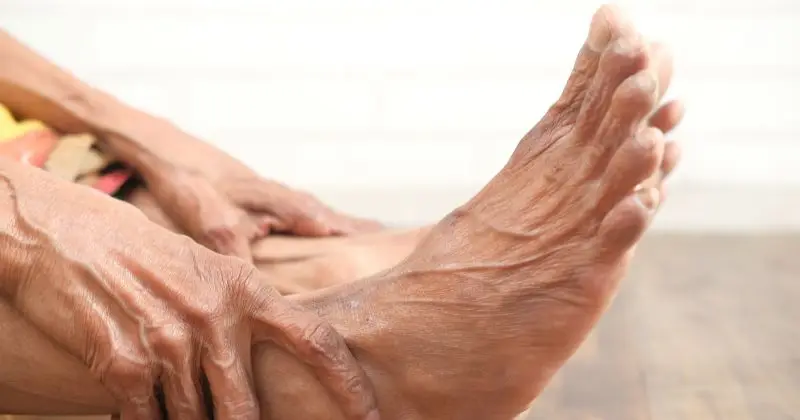
There are various causes, and they often combine. Age is certainly a factor—after 40, tissues become less elastic. Then there's body weight: more weight means more strain on the plantar fascia.
But it's not just a question of age or weight. I've seen young, thin athletes with plantar fasciitis. The problem often stems from small biomechanical alterations in the foot. A foot that's too flat or too high in the arch, an unbalanced gait, the wrong shoes... in short, many small factors that, when combined, create the problem.
Symptoms You Can't Ignore

Waking pain is the most characteristic symptom. You put your foot down and... ouch! That sharp pain almost makes you fall. Then, after walking a bit, the pain eases but never goes away completely.
During the day, it gets worse if you stand a lot or walk for a long time. And in the evening? It often comes back stronger, especially if you've overdone it with physical activity.
Some patients also tell me about a feeling of stiffness in the heel, as if it were "stuck." Others describe pain radiating along the entire sole of the foot.
How do I diagnose?

When a patient comes to me with these symptoms, the first thing I do is listen carefully. The pain history tells me a lot.
Then I move on to the physical exam. I press on some specific points on the heel to determine exactly where it hurts. There's a particular spot, at the insertion of the plantar fascia, that's almost always painful in these cases.
If I have any doubts, or want to rule out other conditions, I recommend an ultrasound or MRI. An X-ray can be helpful in determining whether a heel spur is present, although the pain isn't always directly related to its presence.
Before thinking about surgery

Now, this is important: heel stop surgery isn't the first thing I suggest. We always try conservative treatments first.
Shockwave therapy, hyaluronic acid or cortisone injections, specialized physiotherapy, custom-made insoles... there are many options. Most patients experience relief with these approaches. But if after 6-12 months of treatment, the pain persists and becomes disabling, then we can consider stopping heel surgery.
The heel stop surgery is a minimally invasive procedure that involves cutting some of the nerve fibers that carry pain signals from the heel to the brain. It doesn't address the underlying mechanical problem, but it does "switch off" chronic pain.
How does the heel stop surgery work?
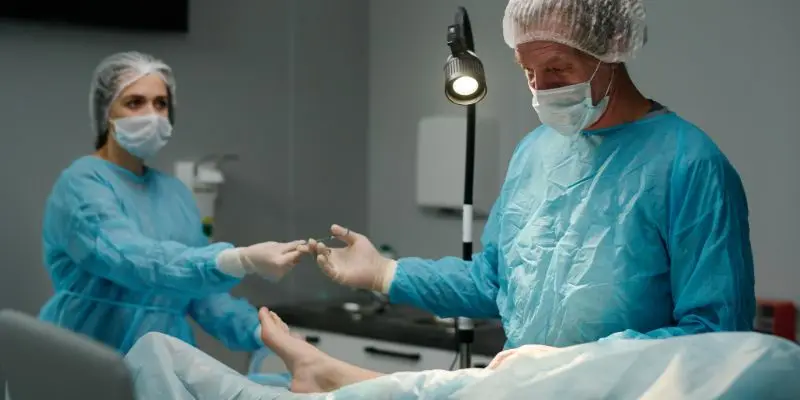
The procedure is quite simple and can be performed as an outpatient procedure. Through a small incision of about a centimeter, I locate the medial calcaneal nerve and selectively sever some of its fibers. It's a bit like "disconnecting" the cord that carries the pain signal.
The procedure lasts about 20-30 minutes and is performed under local or regional anesthesia. The patient can go home the same day.
I have to be honest: it's not a procedure that always guarantees 100% success. The results are good in most cases, but there is always a small percentage of patients who continue to experience discomfort. This is why patient selection is crucial.
Some colleagues prefer bilateral heel stop surgery when the problem is present on both feet, but personally I prefer to treat one foot first and then, if necessary, the other.
Aftercare: What to Expect

In the first few days after heel surgery, rehabilitation begins immediately, but slowly. The foot should be elevated as much as possible to reduce swelling. Walking is possible from day one, but with the aid of a cane or crutches.
The dressing should be changed after 2-3 days, and the stitches are removed after about 10 days. Postoperative pain is usually manageable with common analgesics.
After two weeks, you can gradually return to normal activities. Sports? It's best to wait at least a month, and always with the surgeon's approval.
Rehabilitation is important to fully recover foot function and prevent relapses.
SmartHallux: Where we can help you

Here at SmartHallux, we specialize in foot and ankle surgery. Dr. Luigi Manzi, who has extensive experience in this field, provides each patient with a personalized treatment plan using the most modern and least invasive techniques possible.
The SmartHallux team treats conditions such as hallux valgus , Morton's neuroma , and other deformities that cause foot pain. Providing comprehensive support throughout the treatment process, SmartHallux can be a winning choice for effective treatment tailored to your needs. Book your specialist consultation with the SmartHallux team now (opens in a new tab).
The questions you ask me most often
Doctor, is surgery really necessary?
It's a question I get asked often, and it's a legitimate one. As I was saying, we always try everything else first. Only when the pain is truly disabling and conservative treatments have failed do we consider surgery.
Are there any risks?
As with any surgery, there are risks. Infection, bleeding, possible nerve damage... but these complications are rare when the procedure is performed by experienced hands. It's important to always discuss all risks before deciding.
How long does it take to fully heal?
Most patients return to normal walking within 2-3 weeks. Full recovery may take 2-3 months, depending on your job and activities.